


How Common Are Hernias Among Young Men in Malaysia?
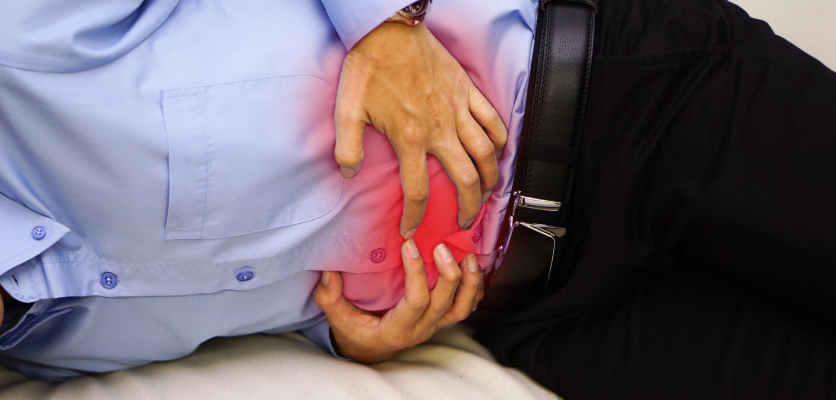
Hernias are easier to be described as a condition when part of a tissue or organ bulges out through a weak point in the muscle or wall; the very same area that is supposed to hold it in place. Hernias can occur at various places such as abdominal wall, belly button, groin and within the body. Groin hernia is the most common type of hernia. There is no exact national data for the incidence of hernias in young men in Malaysia, but the incidence of groin hernias is about 11 per 10,000 individuals aged between 16 and 24 years reported worldwide. In Malaysia, some studies have shown the incidence is markedly more common among males with a male:female ratio of up to 12:1!
What Are the Usual Signs and Symptoms That Young Men Should Look Out For?
Signs and symptoms of hernia depend on the location of the hernia. Common presentation of groin hernia is groin swelling, or even without swelling, especially in the scrotum while standing or coughing. The swelling can be painful or painless which initially can be reduced and then becomes irreducible when the contents of the hernia gets stuck in its position over time. Having said that, there are patients with inguinal hernia bringing about symptoms of complications such as abdominal pain, discomfort, distension or inability to fart or have bowel movement. This requires urgent consultation and treatment.

Are Certain Lifestyles or Activities (e.g., Sports, Heavy Lifting, Gym Workouts) Linked to Higher Risk?
All activities that increase the intra-abdominal pressure include strenuous lifting and carrying such as lifting heavy objects, as well as other activities such as straining and forceful coughing and obesity, may lead to the onset of hernia occurrence especially if the activity is long term.
Can a Hernia Go Away on Its Own, or Does It Always Need Surgery?
All hernias in young men will not recover without surgery as the weak point can only be treated with surgery. Having said that, not all hernias need to be surgically removed especially for people who are unfit for surgery, and without any complications. But it requires thorough assessment by experienced doctors before such a decision is made. Those who have hernia and are fit for surgery are advised to get a consultation for surgery to prevent complications.
What Are the Dangers of Ignoring or Delaying Treatment for a Hernia?
The worst complication that can happen because of hernia, is strangulation. This happens when parts of tissues or organs in the abdomen get trapped and squeezed within a limited space beyond the weak point. If part of the bowel gets trapped, it can obstruct the flow of bowel contents. If these complications remain untreated or delayed, the condition may even threaten the patient’s life especially when perforation, infection or death of an organ has taken place.

What types of hernia surgery are available in Malaysia, and how safe are they?
Surgical repair of hernia in general comes in two options; an open technique with larger incision, and a laparoscopic technique with smaller incisions (pinholes). A laparoscopic technique results in faster recovery but needs specialized expertise. Techniques involve applying a foreign body such as sutures or mesh to strengthen the weak point connecting the abdomen and the scrotum in males. Both open and laparoscopic techniques are relatively safe with low risk of complications related to each procedure.
What Is the Recovery Time After Hernia Surgery, and When Can the Young Male Patient Return to Work, Sports, or Gym?
Ideally, six weeks is the minimal post-surgery recovery time to allow the strengthening of the weak point in the hernia. However, returning to work is allowed after two weeks provided this does not involve strenuous activities. During the six-week recovery period, it is NOT advisable for the patient to go for vigorous activities like sports or gym workouts. This is to allow adequate time for tissue regeneration around the mesh/sutures to take place.
Are there long-term risks, such as recurrence, after a hernia repair?
Yes. There are possible long-term risks such as recurrence and chronic pain following the certain types of hernial repair, but each risk is low. The risks can be reduced further by proper pre-operative planning and preparation. All contributing factors of the hernia which are identified prior to the surgery, should be dealt and optimized with care in order to reduce risk of recurrence after the surgery.
Can Hernias Be Prevented, and If So, What Practical Steps Should Young Men Take?
Hernias may not be entirely preventable as there are lot of factors contributing to the occurrence of any hernia but there are measures to reduce the risks of developing hernia. This can be done by identifying factors leading to the possibility of hernia occurrence and treating the contributing factors accordingly. Adopting a healthy lifestyle, maintaining an ideal body weight, eating a high-fiber diet to prevent constipation and straining, quitting smoking to avoid chronic coughing, and using proper lifting techniques to minimize stress on the abdominal wall; these may reduce risks of developing hernia. Nevertheless, it is also advisable to seek attention, advice and treatment at any nearest health facility in case you recognize any hernia contributing factors. For best outcomes, always the earlier the better.
This article first appeared in PP Health Malaysia, 22 January 2026
Share:
Was this article helpful?
Share:
Was this article helpful?
Health Packages
Elevate your health with tailored health packages at Columbia Asia Hospital. Take charge of your health journey today.
AIA Policyholders Self-pay Benefits
HLA Policyholders Promo: Influenza Vaccination
RM65
Find Out MorePink October 2024
From
RM80
Pink October 2025
From
RM80
Columbia Asia 30th Anniversary Promotion “Senior Health”
From
RM688